
The majority of people don’t consider calories when they stop for a cold brew on their way to work. They are thinking about the smooth flavor, the caffeine, and the fact that it doesn’t have the bitter aftertaste of a hurried drip coffee. To be honest, there aren’t many calories in a 16-ounce cup of plain black cold brew—between five and ten. That’s all. less than the majority of gum sticks.
It’s actually important to comprehend why those trace calories even exist. Plants make up coffee beans. They have trace amounts of protein, natural oils, and carbohydrates. Cold brew extracts a little bit more from the bean than a four-minute drip cycle when it steeps for 12 to 24 hours, which is significantly longer than hot drip coffee.
Therefore, the long steep time pulls out just enough that it appears on a nutrition label, even though no single compound in black cold brew is nutritionally significant. The confusion probably begins with the fact that some cold brews at the grocery store list 15 calories per serving instead of 5. After reading that label and quickly comparing it to their typical drip coffee (which is listed at zero), someone begins to question whether there is more going on.
Part of it can be explained by the FDA rule that permits foods and beverages with fewer than five calories per serving to be labeled as zero. For instance, Starbucks labels their 16-ounce cold brew as having five calories, barely surpassing the requirement that the number appear at all.
Unlike the typical one-to-fifteen used in drip, other brands brew their concentrate at a higher coffee-to-water ratio, roughly one part coffee to five parts water. This indicates that there are more dissolved solids per cup, which equates to a small increase in calories. From a nutritional perspective, it’s still insignificant, but it’s sufficient to occasionally trigger an internet spiral.
What transpires after the base coffee is made is where the calorie story of cold brew truly gets interesting. Depending on the brew, a 16-ounce cup of plain black cold brew contains 200 to 280 milligrams of caffeine, making it one of the lowest-calorie ways to get a significant caffeine hit.
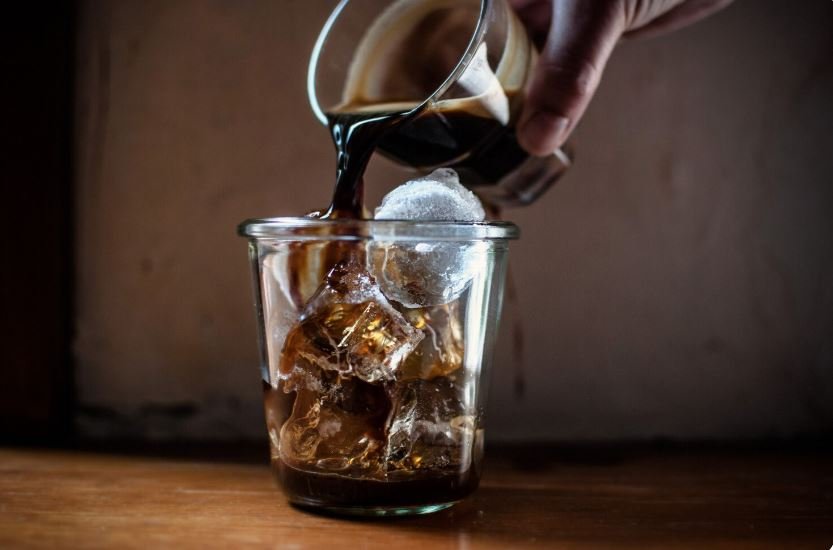
Compared to iced coffee, which usually has about 185 milligrams, that is much more. But all of a sudden, you’re looking at 250 calories or more when you add a little sweetened cream and a few pumps of vanilla syrup. In contrast, a Starbucks Vanilla Sweet Cream Cold Brew has about 250 calories, 27–30 grams of sugar, and 14 grams of fat. Even though it’s more of a dessert than a morning beverage, people who consider themselves to be drinking “just coffee” continue to order it.
It’s important to note that the drink’s cold brew base still contributes very few calories by itself. The stuff layered on top is either the issue or the feature, depending on your point of view. About 20 calories and 5 grams of sugar are added with one pump of flavoring syrup. There could be four to six pumps in a typical specialty drink. The math quickly adds up.
Black cold brew is the safest option available for anyone genuinely attempting to control their consumption. Because it has almost no calories, some people even prefer it during intermittent fasting. The amount of caffeine in it is sufficient to provide a significant energy source without breaking a fast in any significant way, though this is still a topic of discussion on all online nutrition forums.
Without its additives, cold brew is essentially a very effective way to deliver caffeine at almost no cost in calories. The base drink itself is nearly calorie-free, whether you order it from a café or steep a batch in your refrigerator at home. However, the version in the shiny cup at the coffee shop counter merits a second glance—not with alarm, but with a little more awareness than most people bring to their morning order.
