

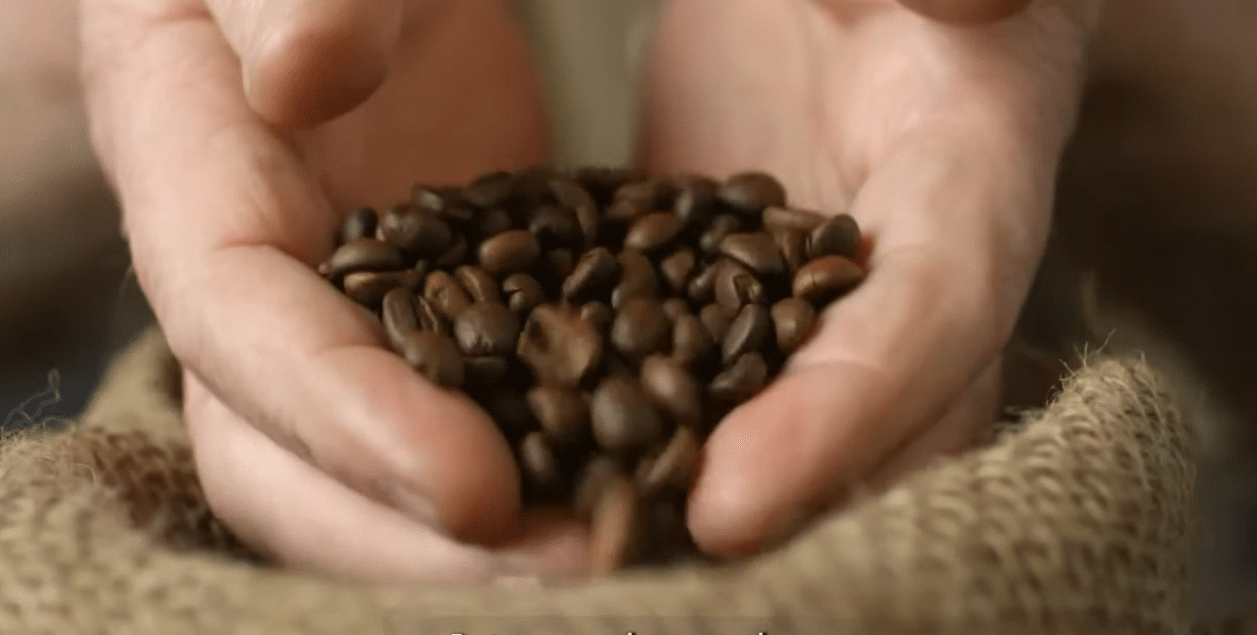
Green coffee beans are being transformed somewhere in Delta, British Columbia, inside a building that resembles a serious industrial plant rather than a coffee shop, all without the use of any chemical solvent. The carbon filtration columns extend from floor to ceiling, the tanks are tall, and engineers wearing hard hats patrol the floor monitoring caffeine levels and moisture readings on apparatus that would be familiar in a pharmaceutical lab. The Swiss Water facility has been subtly changing the expectations of specialty coffee roasters regarding decaffeination.
| Detail | Information |
|---|---|
| Company Name | Swiss Water Decaffeinated Coffee Inc. |
| Facility Location | 7750 Beedie Way, Delta, British Columbia, Canada |
| Decaffeination Method | Swiss Water Process (100% chemical-free) |
| Caffeine Removal Rate | 99.9% caffeine-free |
| Process Duration | Approximately 10 hours per batch |
| Key Ingredient | Green Coffee Extract (GCE) — water + coffee’s natural soluble compounds, minus caffeine |
| Filtration Method | Activated carbon filters (chemical-free) |
| Carbon Regeneration | On-site thermal regeneration furnace; carbon is reused |
| Water Recovery Rate | 85% returned to municipal community supply |
| Certifications Preserved | Organic, Fair Trade, Kosher, Rainforest Alliance, Biodynamic (world’s first biodynamic decaf) |
| Quality Control Method | High-Performance Liquid Chromatography (HPLC) testing on every batch |
| Lab Manager | Stacey Lynden (cupping lab manager) |
| Competing Methods | Methylene chloride (MC), Ethyl Acetate / Sugarcane process, CO₂ supercritical extraction, Mountain Water Process |
| Key Differentiator | No chemicals enter the facility at any stage; flavor profile and certifications remain intact post-decaffeination |
| Notable Series | Small Batch Series — traceable, unique single-origin decaf lots |
The majority of decaf drinkers don’t give much thought to how the caffeine left the bean. That makes sense. However, the solution for the majority of the world’s decaf supply involves either ethyl acetate, which sounds natural but is often produced from industrial waste streams, or methylene chloride, a chemical that the U.S. National Toxicology Program has identified as a potential carcinogen. Both of those facts don’t make for effective marketing. They are rarely found in the grocery store’s decaf section.
Swiss Water takes a completely different approach. After being cleaned upon arrival at the Delta facility, green coffee beans are pre-soaked until their cellular structure opens up and their moisture content approaches fifty percent. Then something really clever occurs. Instead of being submerged in a solvent, the beans are submerged in what the company refers to as “Green Coffee Extract,” a water solution that already contains all of the soluble components of green coffee, with the exception of caffeine. The flavor within the bean has nowhere to go because the extract is already saturated with those flavor molecules. Only the caffeine follows the gradient and moves outward. In essence, it’s osmosis applied with exceptional accuracy.
Each batch takes about ten hours to complete. The caffeine-rich extract is then passed through activated carbon filters, whose pore geometry is precisely adjusted to capture caffeine molecules while allowing other substances to pass through. The carbon is then recycled after the trapped caffeine is burned away in an on-site thermal regeneration furnace. In order to process additional beans, the extract cycles back. The efficiency of this closed loop system is almost elegant; nothing particularly dangerous enters or exits the system, the same carbon continues to filter, and the same water continues to function. Approximately 85% of the facility’s process water is returned to Delta’s municipal supply.
Specialty roasters are genuinely interested in the Swiss Water process because of what it doesn’t destroy, and there is a sizable and expanding community of roasters who care about this. Every coffee that passes through is cupped by Stacey Lynden, the facility’s cupping lab manager, and her staff. It is their responsibility to make sure the decaffeinated version is as close to the original as possible. This entails determining each lot’s unique acidity, body, and origin character before modifying the drying time and temperature to fit the density and moisture profile of that specific bean. The lab explains why a Brazil from Daterra behaves differently in the dryer than a natural anaerobic from Chiriquí, Panama.
The average consumer’s ability to distinguish between Swiss Water decaf and a good EA-processed lot in a blind cup is still up for debate; sincere specialty roasters typically acknowledge that it’s difficult. Some contend that in some Colombian origins, sugarcane ethyl acetate decaf actually preserves sweetness and brightness more successfully. Others vouch for Swiss Water because of its clean-label credentials and consistency. The argument is legitimate and worthwhile. The fact that Swiss Water is the only decaffeination facility that has specifically chosen to keep chemicals completely off the property—not just off the beans, but out of the building—is undeniable.
As coffee culture has shifted over the past ten years toward traceability and transparency, there’s a sense that what Swiss Water created in Delta is more of a preview than an anomaly. For an increasing number of consumers, the Swiss Water process is unaffected by organic certification. Biodynamic certification also applies; the company recently processed what it claims to be the first biodynamic decaf in history. Before anything ships, the quality assurance lab’s High-Performance Liquid Chromatography machine confirms that every batch has 99.9% caffeine removed. There is no approximation in the science. That’s the idea.
The Swiss Water model is a slight provocation for roasters who have spent years treating decaf as a lower-priority SKU—the bag they stock because someone asks for it, using beans they’d never feature on their pour-over menu. It subtly argues—through process rather than marketing—that decaf can convey terroir, that it can be intriguing, and that the decaffeination process is just as much a quality choice as the roast profile. That debate is coming to an end.
