

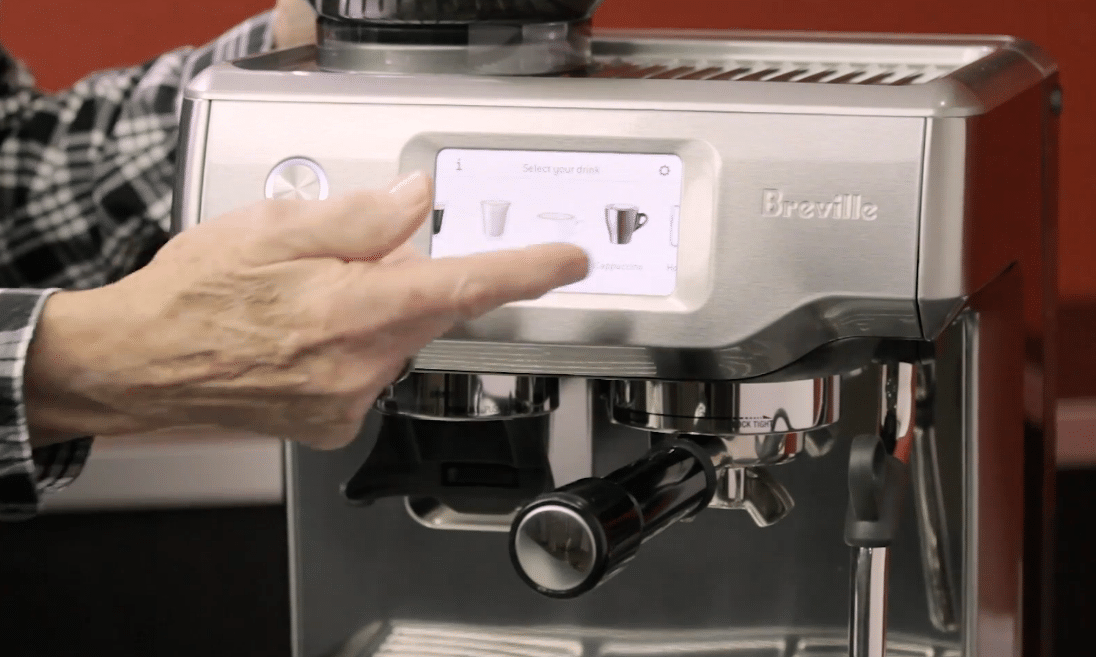
If you spend ten minutes on any espresso forum, you will come across a dispute regarding the Breville Barista Touch. It’s the friendliest way to get real espresso, according to one camp. It’s like a plastic tuxedo to the other. The fact that both sides seem confident usually indicates that the truth lies somewhere in the middle.
Table
| Detail | Information |
|---|---|
| Machine | Breville Barista Touch (also sold as Sage in some markets) |
| What it does | Grinds, doses, tamps assisted, pulls espresso and textures milk from a touchscreen |
| List price | US$799.95 on Breville’s US site |
| Higher-end sibling | Barista Touch Impress, with automatic tamping and milk settings for different plant milks; owners mention prices from about $1,000 to $1,500 |
| Cheaper alternatives owners mention | Breville Bambino with the Smart Grinder; Barista Express |
| Who it suits | Beginners, shared households, people who mostly drink milk drinks, kitchens with limited counter space |
| Common praise | Easy to use, guided workflow, fast from switch-on to coffee, saved drink settings, good results for the price |
| Common complaints | Built-in grinder can be inconsistent shot to shot, fewer options for fine-tuning dose, some owners report plastic-heavy build and mixed long-term reliability |
| Reported upgrade | Owners say newer units ship with upgraded Baratza burrs |
| Maintenance notes | Follow the machine’s cleaning prompts and change the water filter as advised; some owners say descale prompts are rare, so track it yourself |
| Long-term testing | Food & Wine reports five years of use with a positive verdict |
| Purist view | Automation cannot replace dialing in by sight, sound and feel |
| Beginner view | Automation removes the steepest part of the learning curve |
| Middle ground | Use the automatic settings first, then adjust grind, dose and milk texture manually as skills grow |
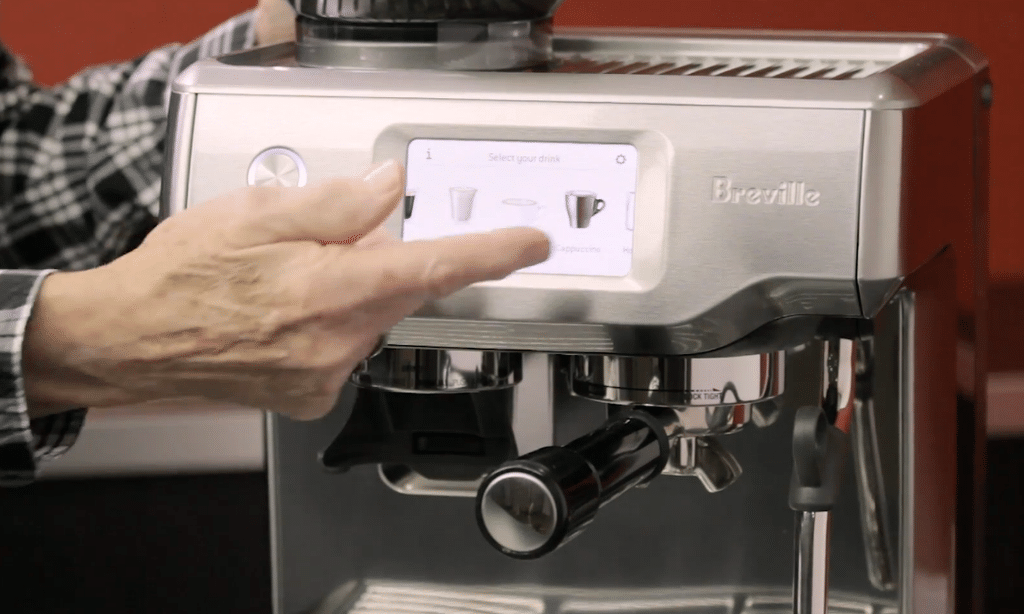
The machine is simple to describe. It automatically steams milk and grinds, doses, and pulls a shot from a touchscreen. The price listed by Breville is $799.95. A beginner receives a guided routine for that amount of money, which used to require weeks of practice and a few wasted mornings.
Imagine a kitchen at seven in the morning. The milk jug is already out, someone is half awake, and no one wants to consider grind size. A flat white appears after one tap, followed by another. It’s difficult to ignore the appeal. Many owners claim that the coffee is better than most they’ve had in cafes, and that’s a high standard.
The tension is aptly captured in a thread on r/espresso. A sixty-year-old man who claimed to be completely non-technical inquired as to whether he and his spouse should purchase the more expensive Touch Impress sibling. After reading positive reviews, he entered a forum full of skeptics. He almost talked himself out of it. He reported back months later that they adore it and use it daily. Nothing had gone wrong. He was honest about the fact that he had nothing to compare it to.
There are valid points on the other side as well. Owners report that, particularly with lighter roasts, the built-in grinder can drift from shot to shot. Some claim that they added scales, tamperers, and their own tricks, turning off the very amenities they had paid for. One commentor, who received a pricey Breville as a gift, claimed that the same settings produced a different shot every time. It’s a single, irate voice. However, such a claim does not appear out of thin air.
Does the craft die as a result of the clever machine? Most likely not. In this context, craft refers to observing that a bag of beans has changed, that the humidity is off, or that the shot ran a bit too quickly. None of that can be detected by a preset. It faithfully repeats itself, which is both beneficial and constrained.
The starting line is moved by the Barista Touch. A button is now required for a tamp that previously required practice. This allows a novice to learn the key components, such as adjusting the grind and purchasing fresher beans from a nearby roaster. With machines like this, the majority of the quality is in the beans, and dialing in is done once and largely holds, according to a seasoned commentor.
But there is a price, and it’s not the only expense. You can become proficient with a guided machine without ever becoming inquisitive. Depending on what you want out of your morning, it may or may not matter. A hobby is what some people desire. Some desire a cappuccino prior to the school run. Neither is incorrect.
How well these machines age is still unknown. One long-term tester at Food & Wine and other reviewers who have lived with the Touch for years report positive experiences. Veterans of the forum continue to have doubts about the interior. Both could be correct at the same time.
Both espresso snobbery and suspicion of anything that makes a skill easier are not new. Photography experienced it. Bread also did. Everyone else received better toast while those who desired the ritual maintained it.
No one can become a barista with the Breville Barista Touch. However, it could make a regular coffee shop patron realize what a good shot tastes like. That’s a fair trade for many households.
