
| Detail | Information |
|---|---|
| Drink Name | McCafé® Iced Coffee |
| Brand | McDonald’s (McCafé line) |
| Coffee Bean Type | 100% Arabica beans |
| Caffeine – Small (~8 fl oz) | ~94 mg |
| Caffeine – Medium (~11.5 fl oz) | ~133 mg |
| Caffeine – Large (~17 fl oz) | ~200 mg |
| Calories – Small | 150 Cal (with cream) |
| Base Ingredients | Brewed coffee, ice, light cream, liquid sugar |
| Flavor Options | Caramel, French Vanilla, Sugar-Free French Vanilla |
| Black Coffee Option | Available without cream or sugar |
| Contains Espresso? | No |
| FDA Daily Caffeine Limit (Adults) | 400 mg |
| Pregnancy Caffeine Guideline | Generally under 200 mg/day |
| Large vs. FDA Limit | ~200 mg = approximately half the daily adult limit |
| Caffeine Transparency | Not officially printed on standard menus; widely accepted estimates |
| Note on Consistency | Caffeine may vary slightly by location, brew strength, and ice level |
| Available Sizes | Small, Medium, Large |
| Ordering Options | In-store, Drive-through, Mobile Order & Pay, McDelivery® |
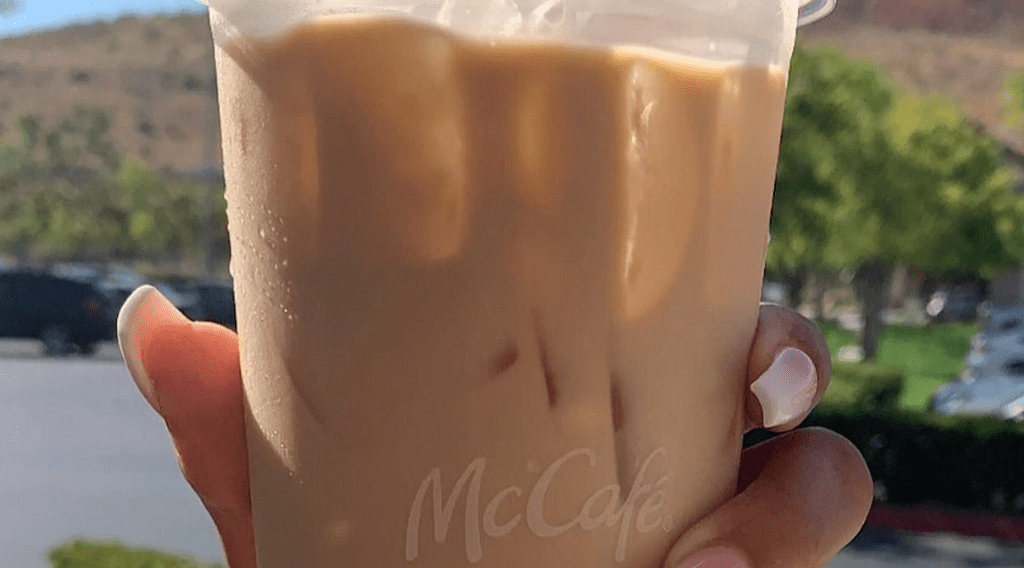
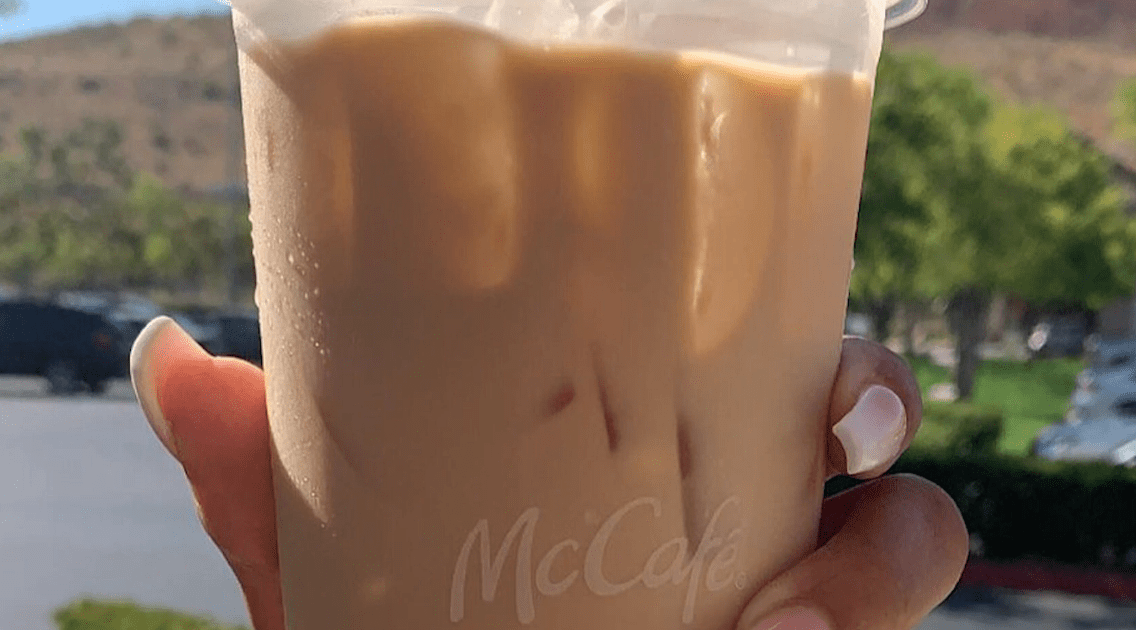
There’s almost nothing hard about ordering an iced coffee at McDonald’s. When you get to the drive-through window, you might use the app to get a discount. In a minute, you’re on the road with a black straw in a clear plastic cup. A lot of people drink it every day, and most of them probably wouldn’t be able to tell you what’s in it chemically other than “coffee and some cream.”
When you look at the caffeine numbers, which McDonald’s doesn’t put in a big way on its regular menu boards, they tell an interesting story. About 94 milligrams of caffeine are in a small McCafé Iced Coffee, which is about 8 ounces. A medium weighs about 11.5 ounces, which is about 133 milligrams. The big one weighs about 17 ounces and holds about 200 milligrams. More than doubling from small to large is a big change, and it’s the kind of thing that matters if you’re keeping track of your daily intake or trying to stay below a certain level for health reasons.
The FDA says that healthy adults should not drink more than 400 milligrams of caffeine per day. That means that a large iced coffee from McDonald’s has about half of that in it. That’s probably fine for most people who aren’t drinking it with a bunch of other caffeinated drinks. However, pregnant women, people with certain heart conditions, and people who are sensitive to caffeine should know the difference between ordering a small and a large. They might be more likely to change their minds if those numbers were easier to find.
There are 100% Arabica beans in the drink, which McDonald’s has been using in all of its McCafé coffee drinks for years. This is part of a larger effort the company made in the mid-2000s to compete more seriously with specialty coffee chains. The iced coffee version has brewed coffee mixed with light cream, liquid sugar, and flavor syrups like caramel or French vanilla that can be added if desired. The drink is easy to make. It’s different from the lattes and macchiatos on the McCafé menu because it doesn’t have espresso in it. This also makes the caffeine content more stable than in drinks made with multiple espresso shots.
People talking about McDonald’s iced coffee caffeine a lot are pregnant women trying to figure out if their medium caramel iced coffee will put them over the limit their doctor has told them not to go. This can be seen in parenting forums and Facebook groups. When you’re pregnant, most doctors say to stay below 200 milligrams per day. A large McDonald’s iced coffee is right on the edge of that limit. At 133 milligrams, a medium leaves more room for other sources of caffeine that come up during the day, like a piece of chocolate, a soda, or anything else. A lot of people care about that useful math.
One important thing to remember is that coffee drinks never have the same amount of caffeine. McDonald’s admits this, saying that nutritional values can change depending on serving size, preparation, and where ingredients come from. The most common numbers given are 94 mg, 133 mg, and 200 mg. These are estimates, not exact numbers that are printed on every cup. The strength of the coffee may be a little different at each franchise location, and the amount of ice in the cup affects how watered down the drink is in the end. Even though none of this makes a huge difference to the big picture, it does mean that these numbers should probably be used as rough guides instead of exact measurements.
If you usually get McDonald’s iced coffee and haven’t thought much about how much caffeine it has, this is a pretty easy thing to remember. A small gives you about the same amount of caffeine as a regular cup of drip coffee. The level of a medium is firmly in the moderate range. And a large is pretty close to half of the daily limit in one drink, even though it’s still technically within what most health authorities say is safe for healthy adults. Knowing that doesn’t mean anything has to be changed. But that’s the kind of thing you should keep in mind the next time you have to choose between sizes.