

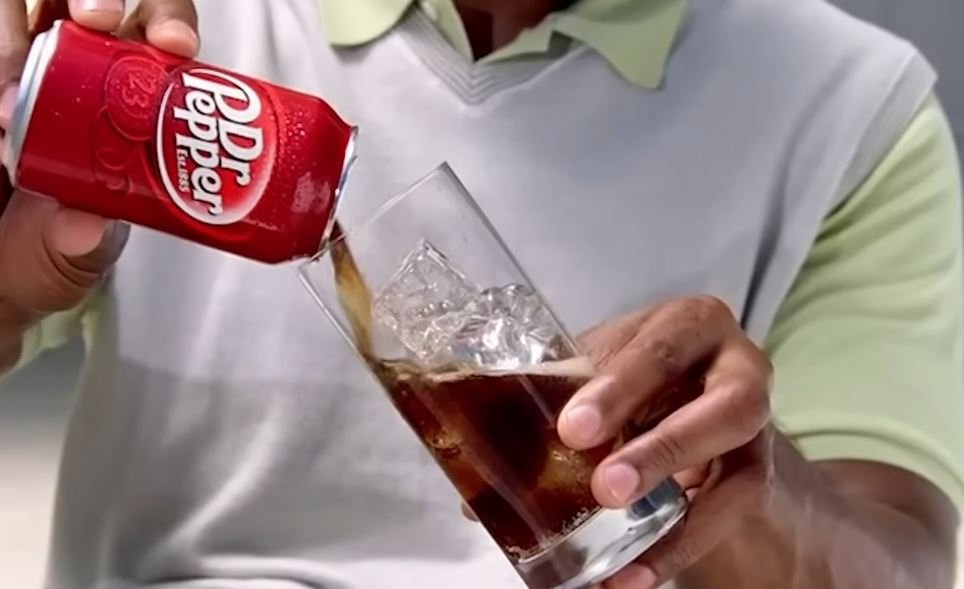
Reaching for a Dr. Pepper can has an almost nostalgic quality. The flavor that no one can quite put into words, the dark, fizzing liquid, and the distinct scent once the tab is cracked. Is it peppery? Fruity? Strangely beneficial in a medicinal sense? Since 1885, people have been debating it, and to be honest, they probably won’t stop anytime soon.
However, if you’re wondering if that can is giving you a caffeine rush, the answer is that it is, but it’s not the kind that will blow you away.
There are roughly 41 to 42 milligrams of caffeine in a typical 12-ounce can of Dr. Pepper. This is what the official nutritional data indicates, and independent laboratory analysis, such as a 2007 study published in the Journal of Food Science that estimated it at 42.6 mg per 12-ounce serving, has confirmed it. That’s a fair middle-of-the-road amount for a soda. At 34 mg, it’s higher than a Coca-Cola, marginally higher than a Pepsi at 38 mg, and significantly lower than a brewed cup of coffee, which starts at 95 mg and goes up from there.
To put it simply, a single Dr. Pepper can won’t taste like espresso. However, it’s also not nothing.
You will consume about 68 milligrams of caffeine if you drink the larger 20-ounce bottle, which is actually the more practical choice if you’re getting one from a gas station cooler. It’s still moderate, still below the level that most healthy adults should be concerned about, but it’s something to be aware of if you’re consuming a lot of sodas along with coffee and tea throughout the day.
All of Dr. Pepper’s products have roughly the same amount of caffeine. Dr. Pepper Zero Sugar and Diet Dr. Pepper are about the same 41 mg as the standard version. The Cherry and Cherry Vanilla types drop to about 39 mg, a slight decrease. Caffeine-Free Dr. Pepper is a viable choice for an evening beverage or for anyone who is caffeine-sensitive if you want to completely avoid caffeine. It offers the full 23-flavor experience with zero milligrams of caffeine.
It’s worth taking a moment to consider the context of 41 milligrams. According to the FDA, healthy adults can safely consume up to 400 mg of caffeine daily. You can get about 10% of the way there with just one can of Dr. Pepper. That is not concerning. However, caffeine has a way of subtly building up throughout the day—a morning coffee here, an afternoon soda there, perhaps a tea in between—and people don’t always stop at one can. By itself, the Dr. Pepper isn’t the issue. What matters is how it fits into the bigger picture.
While drinking Dr. Pepper, most people are unaware of its fascinating history. It was created in Waco, Texas, in 1885 by a pharmacist by the name of Charles Alderton, making it the oldest major soft drink brand in the US and a year older than Coca-Cola. It seems that early patrons referred to it as a “Waco.” It was bottled and sold all over the country by 1905. Even though no one was measuring milligrams at the time, the caffeine was probably part of the appeal from the start.
People frequently wonder if Dr. Pepper is a good source of caffeine. The truthful response becomes a little more nuanced at this point. There is real caffeine, but there is also real sugar—roughly 41 grams per 12-ounce can, mostly from high fructose corn syrup. That’s a significant amount of sugar to take in addition to a little caffeine boost. In contrast, coffee contains three to four times the amount of caffeine and almost no calories or sugar. A cup of black coffee is just more effective if you’re looking for caffeine. That’s a whole different discussion if you’re looking for a particular Dr. Pepper flavor.
Walking down the soda aisle these days, it seems like people are more interested in what’s inside the can than they were in the past. Information that was previously only found in small print, such as ingredient lists, sugar content, and caffeine content, is now actively sought after. The caffeine content of Dr. Pepper is neither shocking nor controversial. Before you make it a daily habit, it’s just a fact to be aware of, particularly if you’re controlling your heart rate, sleep, or total stimulant intake. One can is sufficient for the majority of people. So is the occasional 20-ounce bottle for the majority of people. Most is the crucial word.
