

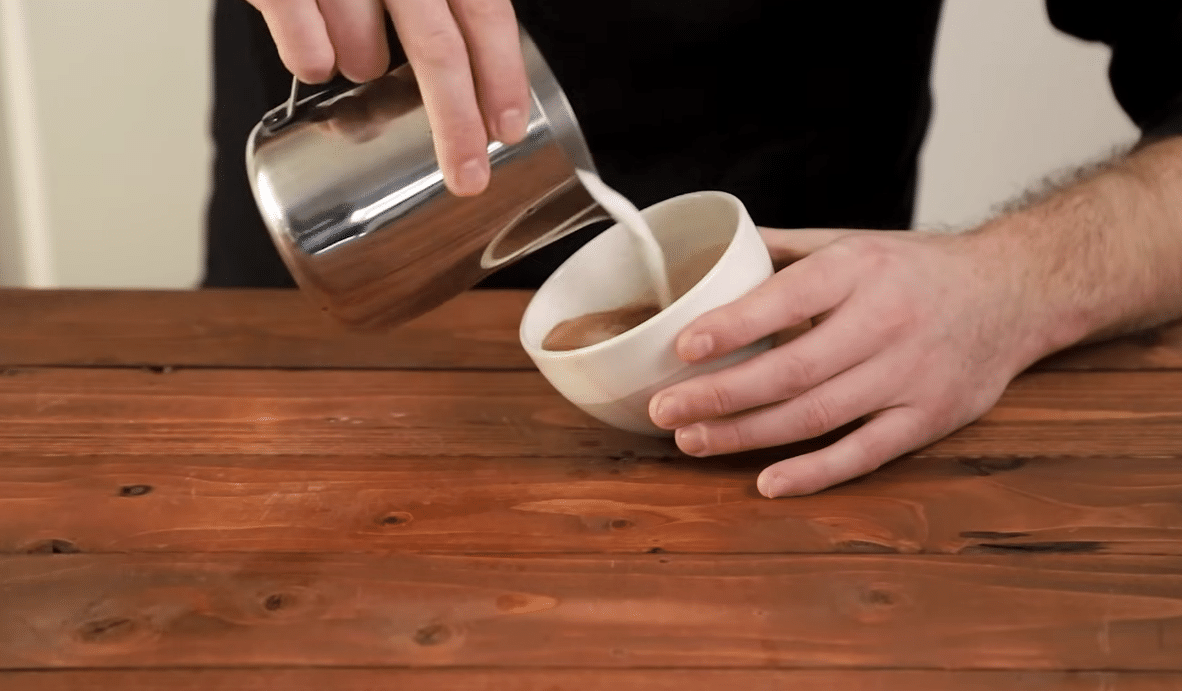
Something changes when you add a little vanilla creamer to a tall glass and run a cheap handheld frother through it for twenty seconds. The liquid ascends the glass. It becomes dense and pale, resembling the foam on a cappuccino at a café. So what happens if creamer is frothed? Generally speaking, the foam is richer and thicker than what milk typically produces.
| Topic | Details |
|---|---|
| Short answer | Frothing creamer turns it into a thick, velvety foam that roughly doubles in volume |
| What happens physically | Air is whipped in, creating tiny bubbles held in place by fat, protein, and stabilizers |
| Best creamers to froth | Liquid dairy creamers and oat-based creamers |
| Weaker results | Fat-free or light creamers give airier foam that collapses faster |
| Powdered creamer | Will not froth directly; dissolve in a small amount of hot water first |
| Cold creamer | Froths faster and gives a velvety cold foam for iced drinks and cold brew |
| Warm creamer | Takes a bit longer but produces foam that holds its shape longer |
| Heating tip | Warm gently; boiling breaks down the proteins and fats that stabilize foam |
| Method 1: Handheld frother | Fill a tall cup no more than halfway, froth 15 to 30 seconds just below the surface |
| Method 2: French press | Fill no more than halfway, pump the plunger for 20 to 30 seconds |
| Method 3: Mason jar | Fill about one third, shake hard for 30 to 45 seconds; microwave 15 to 20 seconds for warm foam |
| Other tools | Steam wand, electric frother, pump frother, or an immersion blender (needs more creamer) |
| Taste effect | Flavor stays the same, but sweetness can feel slightly less concentrated |
| Quick fix for less sweetness | Add a little more creamer than usual |
| Very rich creamers | A small splash of water can improve the foam |
| Espresso machine warning | Creamer can clog milk systems; use a separate frother or clean right away |
| Compared to milk | Creamer foam is denser, creamier, and holds shape longer, but can feel heavy |
| Best uses | Cappuccino-style drinks, lattes, iced coffee, cold brew |
The mechanics are easy to understand. The liquid is broken up into thousands of tiny bubbles by the frother’s whipping of air. The contents of the bottle will determine how long those bubbles last. In addition to fat and a small amount of protein, creamers frequently contain gums or emulsifiers that help the bubbles maintain their shape. Because plain milk contains fewer of those assistants, its foam may appear fluffy at first but eventually disappear.
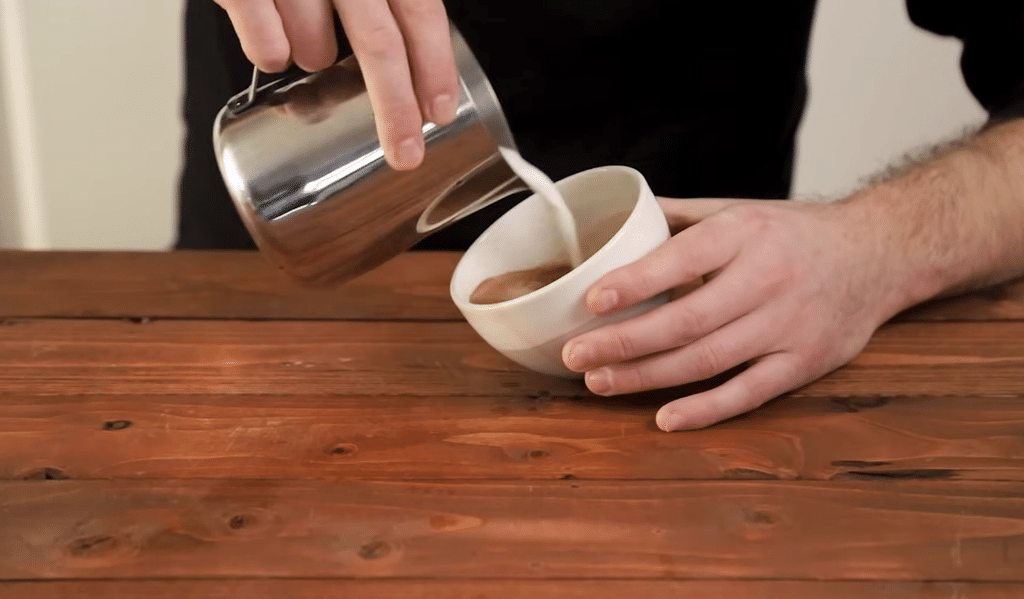
It’s strangely satisfying to watch it work. The surface becomes glossy, the volume nearly doubles, and the foam remains on a spoon for a brief period of time before gradually sliding off. Stiff peaks won’t support it. Creamer isn’t meant for that; that’s whipped cream territory. However, it’s more than adequate as a coffee topping.
Not all creamers act in the same manner. Because of their natural body and fat content, liquid dairy and oat-based creamers typically foam the best. Although “light” or fat-free versions still foam, the end product is flatter and collapses much more quickly. Those can easily make you feel disappointed, and a fuller-bodied bottle is usually the solution. Conversely, some creamers are so rich that they foam better when a little water is added.
Temperature is also important. Cold creamer quickly froths, producing a smooth, cold foam that goes well with cold brew. The foam usually lasts longer with warm creamer, but it takes a little longer. Warm does not mean boiling. The proteins and fats that keep the bubbles together may be broken down by overheating, leaving you with a depressing, watery cup.
Contrary to popular belief, tools are not as much of a barrier. In less than a minute, a handheld frother completes the task, and when the plunger is pumped, a French press performs nearly as well. It can even be done with a mason jar. After filling it about one-third of the way, tighten the lid and shake until your arm aches. Usually, 30 to 45 seconds is sufficient.
The only true exception is powdered creamer. On its own, it won’t foam. To avoid gritty foam, first stir it into a small amount of hot water until it is perfectly smooth. Although it’s not as thick as liquid creamer, it’s still good for a quick cup.
People are surprised by one particular detail. Compared to the same amount stirred in, frothed creamer may taste a little less sweet. The sugar feels more dispersed on the tongue because the air lightens the texture. A little more creamer usually fixes a drink that seems flat after it has frothed. It’s not much, but it’s simple to overlook.
And then there’s the machine. Many owners claim that running creamer through the milk system of an espresso machine can clog it, so it’s probably better to use a different frother and rinse it immediately after. After it dries, sticky, sugary residue is difficult to remove.
It’s difficult to ignore how much texture, rather than just flavor, contributes to the café experience. A bottle of creamer from the grocery aisle can imitate that smooth top layer for pennies, and coffee shops charge for it. Not flawlessly, and perhaps not permanently. However, tomorrow morning’s cup may resemble the one you typically pay more for.
