

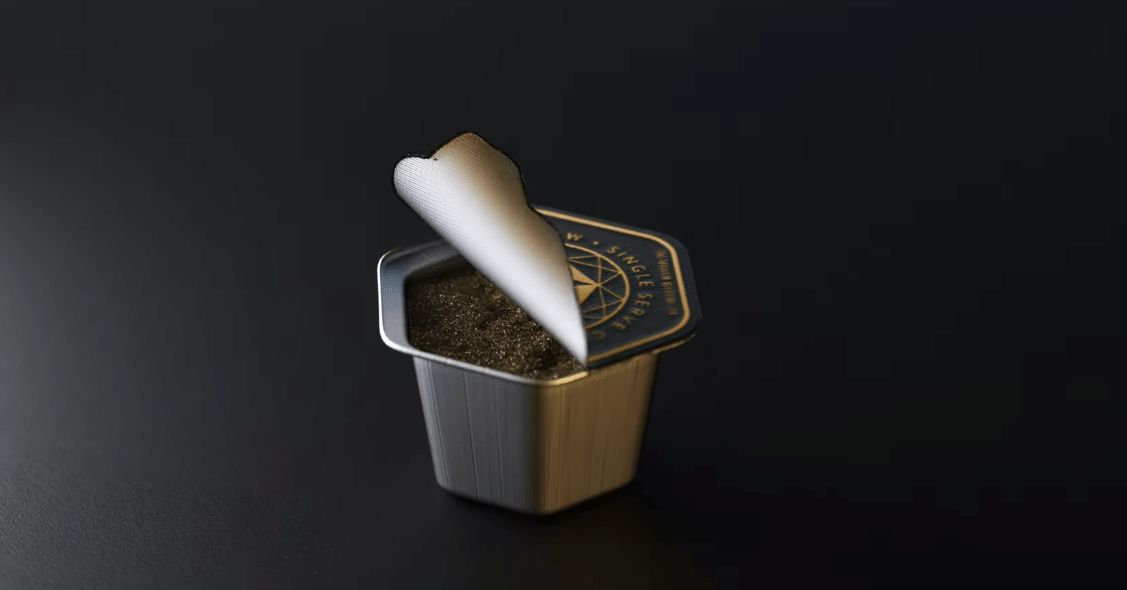
Without much hesitation, the majority of coffee enthusiasts would tell you that instant is a compromise. It’s what you make when you’re in a hotel room, when the machine malfunctions, or when you’ve run out of time. It tastes good in the same way that fast food does; it’s practical but not something you’d pick if you had more options. Diamond Brew’s founder, Douglas Yu, is essentially placing a wager that this view is about to shift.
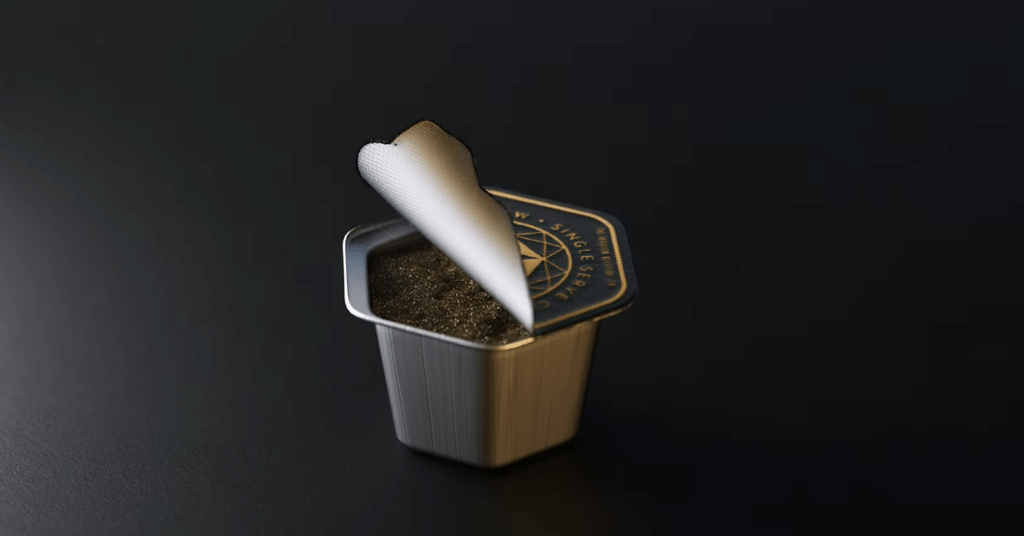
Yu actually trademarked the term “brewless” coffee, which Diamond Brew claims to be the first in America. The product is delivered in pre-portioned pods as tiny, quickly dissolving crystals. With about 160 milligrams of caffeine per 3.5-gram capsule, you can quickly make what the company refers to as a double-shot espresso equivalent by adding hot water. Not a grinder. Not a machine. Not cleaning. The brand’s tasting notes, which include dark chocolate, caramel, and hazelnuts, are similar to those found on a specialty coffee menu in Wicker Park or the Mission District rather than on a jar of crystals from the grocery aisle. The beans are sourced from Guatemala, Colombia, and Sumatra.
| Detail | Information |
|---|---|
| Product Name | Diamond Brew® (Brewless Instant Coffee) |
| Brand Tagline | America’s First Brewless Coffee |
| Founder | Douglas Yu |
| Founded/Launched | 2024 |
| Headquarters | Chicago, Illinois, USA |
| Product Type | Crystalized specialty instant coffee (freeze-dried) |
| Caffeine Per Pod | ~160mg per 3.5g capsule |
| Equivalent To | Double-shot espresso |
| Coffee Origins | Guatemala, Colombia, Sumatra |
| Tasting Notes | Dark chocolate, caramel, hazelnuts |
| Ingredients | Coffee (only) |
| Preparation Method | Add 2oz hot water — no machine, grinder, or brewing required |
| Available Drinks | Espresso, Americano, Latte, Espresso Martini, Decaf |
| One-Time Purchase Price | $48.98 – $52.98 |
| Subscription Price | $44.98 |
| Cost Per Cup (Subscription) | Approx. $1.87 |
| Freeze-Drying Temperature | -40°F (airtight tunnel process) |
| Traditional Instant Caffeine (comparison) | 30–50mg (spray-dried or dehydrated methods) |
| Pods Sold | 1 million+ |
| Lab Tested | Yes — for mold and toxins |
| Brewing Equipment Required | None |
| Founder Background | Journalist; covered venture capital in food & beverage |
| Founder Education | Journalism degree, Emerson College, Boston |
The method is what sets Diamond Brew apart from what most people imagine when they think of instant coffee. Conventional instant coffee is usually produced by spray-drying or high-temperature dehydration, which removes a large amount of the flavor compounds and leaves behind something distinctly flat. In order to lock in the flavor of brewed coffee concentrate before cracking it into shelf-stable shards, Yu’s company uses a proprietary freeze-drying technique that involves passing it through an airtight tunnel at minus 40 degrees Fahrenheit. According to Yu, the caffeine content stays closer to a real espresso shot rather than the 30 to 50 milligrams typical of standard instant options because it’s a cold process rather than a heat process.
Yu took a unique route to start a coffee business. In his early twenties, he relocated from China to Boston to attend Emerson College to study journalism. Later, he moved to Chicago to cover venture capital in the food and beverage sector. His background provided him with something that most first-time CPG founders lack from the outset: a fairly clear understanding of what makes a product truly scale, as well as the professional connections to quickly identify when an idea doesn’t add up. He claims that realizing that not a single instant coffee on the shelf tasted like freshly brewed coffee while standing in a grocery aisle was the pivotal moment. It’s a straightforward observation, but occasionally those are the ones that develop into businesses.
The cost is between $48.98 and $52.98 for a single purchase or $44.98 for a subscription, or about $1.87 per cup. That is less costly than a regular coffee shop habit, but more costly than a tin of instant from the grocery store. Diamond Brew may find its true footing in the subscription model, catering to the type of consumer who wants specialty coffee at home but finds the equipment too much to handle on a regular basis. The fact that the product has sold more than a million pods indicates that at least a portion of that market exists and is interested.
Observing the growth of this category gives me the impression that the timing may be ideal. For a number of years, the coffee market has been shifting toward convenience, and quality has been progressively catching up. Examples include cold brew in cans, single-serve specialty pods, and flash-brewed concentrates. Although Diamond Brew is not the only company attempting to make instant coffee worthwhile, it is in a more intriguing position than most thanks to the combination of freeze-drying technology, authentic origin sourcing, and a fairly distinctive brand identity. It remains to be seen if it can maintain that position as the category becomes more competitive. As of right now, the crystals are disintegrating, and more orders appear to be coming in.
