
Most coffee drinkers are familiar with this moment. You’re looking at a full mug in the middle of the morning, feeling a little dizzy, and wondering if one cup will be sufficient or if it will be too much. Although it makes sense, surprisingly few people are aware of what’s in that cup. It turns out that the response falls somewhere between “it depends” and “quite a bit.”
The average amount of caffeine in an 8-ounce cup of brewed coffee is about 95 milligrams. Although the actual range can vary from 70 milligrams to 140 milligrams or more, most nutritionists and food scientists settle on that figure. If you’ve ever had the impression that one cup, even from the same bag of beans, hit harder than another, it’s not your imagination.
Contrary to popular belief, the brewing process has a significant impact. The average for drip coffee is usually around 95 mg. French press tends to extract more caffeine, typically between 100 and 135 milligrams for an 8-ounce serving, because the grounds steep directly in hot water for several minutes. Pour-over is in a similar range. The amount of caffeine extracted increases with the length of time hot water comes into contact with the grounds. Your morning routine matters in ways that go beyond taste preferences, but it’s not complicated chemistry.
Then there’s the roast question, which is arguably the subject of more coffee-aisle disputes than any other. Lighter roasts typically contain a little bit more caffeine than dark roasts, despite the bold, dark branding of most “strong” coffees suggesting otherwise.
A lightly roasted bean retains a little more caffeine because the roasting process gradually burns off tiny amounts. Although the difference is small—nearly insignificant in the majority of comparisons—it does exist. Dark roast’s perceived “strength” is determined by its flavor intensity rather than its caffeine content. It’s a helpful distinction to have on hand.
The situation with instant coffee is completely different. An 8-ounce cup usually contains between 60 and 65 milligrams, which is significantly less than what is brewed. Nevertheless, it’s not insignificant. Furthermore, most 8-ounce cups of decaf contain between 2 and 15 milligrams of caffeine, despite the name suggesting otherwise. Most people don’t care about that, but it’s important to know if you’re managing a medical condition or are extremely sensitive.
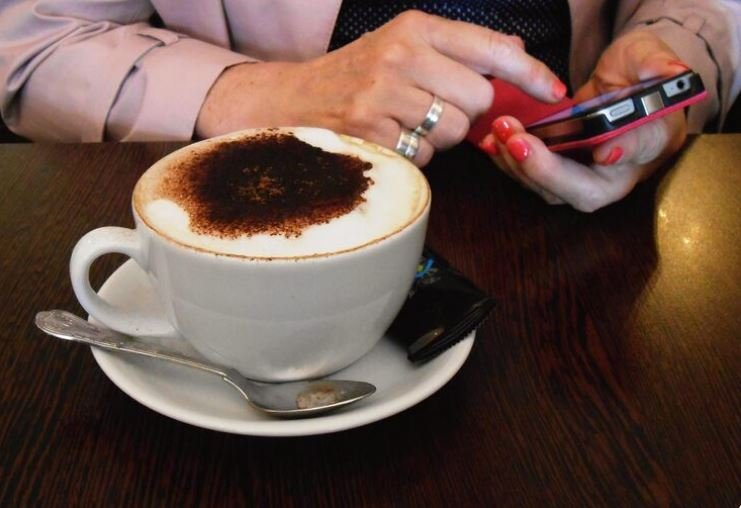
Perhaps the most neglected factor in the entire discussion is serving size. At this point, the 8-ounce standard is practically a myth. The majority of household mugs begin at 12 ounces. At many large chains, the smallest brewed coffee is likewise 12 ounces, and sizes quickly increase from there. Depending on how the coffee was brewed and concentrated, a 16-ounce cup from a specialty store may contain 200 mg or more. After just one or two large cups, that puts some people well on their way to the 400 milligrams per day that health agencies typically identify as a reasonable upper limit for most healthy adults.
Although it’s not a hard ceiling for everyone, the FDA’s 400 mg daily recommendation is something to keep in mind. Individual differences in the body’s metabolism of caffeine are mostly due to genetic variations. Some people have no trouble falling asleep after consuming four cups in the afternoon. After one, others experience anxiety and jitters. It’s simply biology being inconsistent, as it usually is; neither experience is exceptional.
One 8-ounce cup of coffee in the morning is a moderate, doable amount of caffeine for the majority of regular coffee drinkers. Depending on the type of beans used, the length of time they were roasted, and the way the water passed through the grounds, it was approximately 95 milligrams, give or take. That is sufficient to improve concentration and clear the mist of an early morning without raising heart rate. This is likely the reason why it has become the first thing that people in the majority of the world strive for on a daily basis.
